Film Guides / How movies are made
Lighting for film
Three-point lighting, hard and soft light, color temperature and the gear on a film set, explained so you can see it on screen.
Light is the raw material of cinema. A camera cannot record what is not lit, and the same face can look warm, menacing or tired depending on where the light comes from. The director of photography designs the lighting, the gaffer and electricians build it, and grips shape it.
Three-point lighting
The classic starting point taught in every film school uses three lights:
- Key light: the main source, usually placed to one side of the camera. It sets the exposure and the mood.
- Fill light: a softer light on the other side that lifts the shadows created by the key.
- Back light (also rim or hair light): behind the subject, separating them from the background with a thin outline of light.
The balance between key and fill is called the lighting ratio. A low ratio (fill nearly as bright as key) gives the even, cheerful look of many comedies. A high ratio with deep shadows gives the dramatic look known as low-key lighting, central to film noir and many horror and thriller films.
Hard light and soft light
| Hard light | Soft light | |
|---|---|---|
| Source | Small or distant source, like the midday sun | Large source, like an overcast sky or window |
| Shadows | Sharp-edged and dark | Gradual and gentle |
| Feeling | Drama, heat, tension | Natural, flattering, calm |
| How it is made | Bare lamp, Fresnel focused to spot | Bounce boards, diffusion fabric, softboxes |
Most modern cinematography leans toward soft, motivated light, but hard light remains a powerful tool.
Motivated light
Good film lighting usually feels as if it comes from a real source inside the scene: a window, a lamp, a fire, a phone screen. This is motivated lighting. The visible lamp on a table might be a dim prop, while a much stronger hidden light just out of frame does the real work, matching its direction and color.
Color temperature
Light has a color, measured in kelvin (K):
- Candlelight is roughly 1,900K and very orange.
- Tungsten film lamps are about 3,200K, warm.
- Daylight is about 5,600K, neutral to slightly blue.
- Shade and overcast sky are higher and bluer.
Cinematographers mix temperatures on purpose, for example a warm interior lamp against blue twilight through a window. Colored gels placed over lights adjust temperature or add strong colors. Final adjustments happen in color grading.
The tools on set
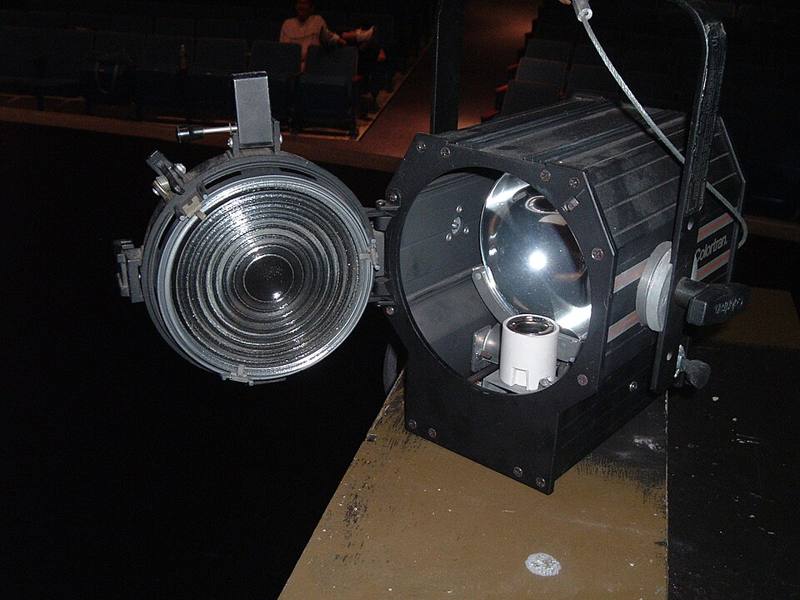
- Fresnel lamps: a stepped lens lets the beam be focused from spot to flood. Used in film and theater since the early 20th century.
- HMI lamps: powerful daylight-balanced lamps used to mimic or boost sunlight.
- LED panels and tubes: now standard. They run cool, use less power and many can change color and brightness from a tablet.
- Flags, nets and diffusion frames: grip tools that block, reduce or soften light.
- Bounce boards and reflectors: redirect sunlight or lamp light to fill shadows.
- LED volumes: giant LED walls showing a digital background that also lights the actors. See visual effects.
Shooting by available light
Some films work almost entirely with existing light, using fast lenses and sensitive cameras. Very sensitive digital sensors have made candlelit and streetlit scenes much easier than in the film era, when a scene lit only by candles needed specially adapted lenses.
The "magic hour" just after sunrise and before sunset gives soft, warm, low-angle light. Crews often plan a whole day around a few minutes of it.
Pause any scene and look at the actors' eyes. The small reflections, called catchlights, often reveal where the key light was placed.