Film Guides / Film formats and cinema tech
35mm and 70mm film explained
What the numbers mean, why 35mm became the world standard for a century, and why 70mm screenings still sell out.
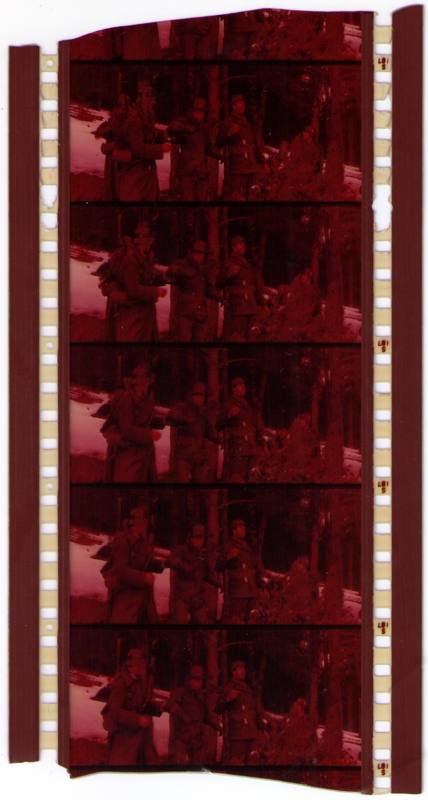
Film gauges are named by the width of the film strip in millimeters. For about a hundred years, almost every cinema on Earth ran the same 35mm film, and that shared standard is one reason movies could travel the world so easily.
How 35mm became the standard
35mm film grew out of the work of Thomas Edison's laboratory and the Eastman company in the early 1890s, and the Lumiere brothers used a similar width for their Cinematographe. By around 1909 industry agreements had settled on 35mm with four perforations (sprocket holes) on each side of every frame. That standard lasted, with refinements, until digital projection took over around the early 2010s.
Key features of classic 35mm:
- 4 perforations per frame, often written "4-perf".
- 24 frames per second in the sound era, about 27 meters (90 feet) of film every minute. See frame rates.
- A soundtrack printed along the edge of the film, originally optical and later digital as well.
- The Academy ratio of 1.37:1 for sound films from 1932, later replaced by widescreen ratios. See aspect ratios.
Other gauges
| Gauge | Main use | Notes |
|---|---|---|
| 8mm and Super 8 | Home movies | Super 8 launched in 1965 and is still used for its look |
| 16mm | Documentaries, TV, student and independent films | Lighter, cheaper cameras |
| 35mm | Feature films and cinema projection | The century-long standard |
| 65mm | Camera negative for large-format films | Shot in camera, printed to 70mm |
| 70mm | Projection prints for large-format screenings | Extra width carried magnetic soundtracks |
| 15/70 (IMAX) | IMAX film | 70mm film running sideways, 15 perfs per frame |
Why 65mm in the camera and 70mm in the projector?
Large-format films are usually shot on 65mm negative. The release prints are 70mm wide; the extra 5mm originally carried magnetic stripes for multichannel sound. The standard 70mm frame, popularized by the Todd-AO process in the mid-1950s, is 5 perforations tall and gives an aspect ratio of about 2.20:1.
A variant called Ultra Panavision 70 adds a slight anamorphic squeeze to produce an ultra-wide image of about 2.76:1. It was used for a handful of epics in the late 1950s and 1960s and revived occasionally since.
Why 70mm looks so good
A 70mm frame has roughly three and a half times the area of a standard 35mm frame. More area means:
- Finer detail on a big screen.
- Less visible grain.
- A brighter, steadier image, because the frame is magnified less.
Large-format film was a major selling point of the roadshow epics of the widescreen era, when films played in grand theaters with reserved seats, an overture and an intermission.
Film in the digital age
Most films are now shot and projected digitally. Film remains alive in three ways:
- Shooting on film: some directors still shoot 35mm or 65mm for its texture, even when the film is finished and shown digitally.
- Special engagements: certain releases are shown on 35mm, 70mm or IMAX 70mm prints in a small number of equipped cinemas worldwide. These screenings often sell out early.
- Archives and repertory cinemas: classic films are preserved and shown on film by archives and specialist venues.
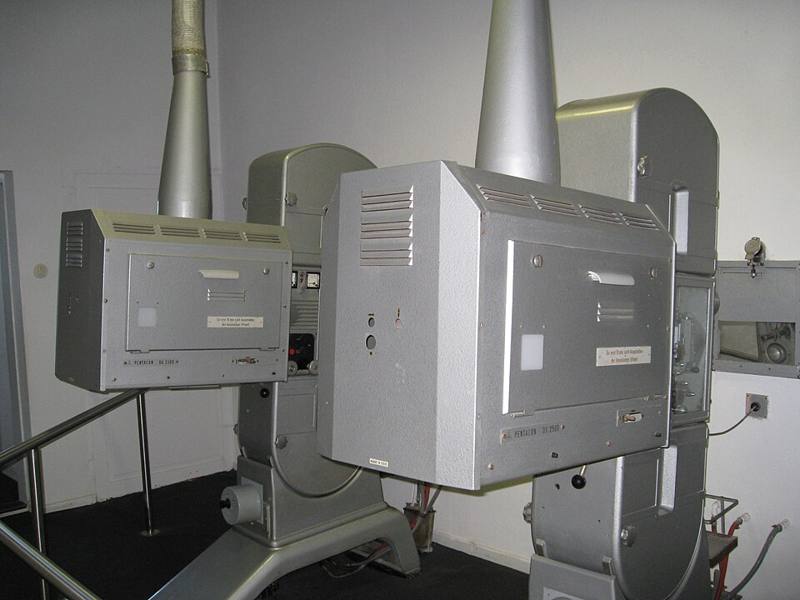
If a film is advertised "in 70mm", check that the cinema is running an actual print. Some marketing uses the label loosely. Our guide to projection explains the difference between film and digital presentation.
Handling film
Film prints are heavy. A feature on 35mm typically arrived at a cinema as five or six reels in metal cans, and a 70mm print weighs considerably more. Projectionists spliced the reels together onto a large horizontal platter, then took them apart again before the print moved to the next cinema.