Bollywood and Indian cinema
India makes more films than any other country, in many languages. Bollywood, the Hindi-language industry based in Mumbai, is the best known, but it is only part of the story.
What "Bollywood" means
"Bollywood" is a nickname that blends Bombay (the former name of Mumbai) with Hollywood. It refers to the Hindi-language film industry centered in Mumbai. India as a whole produces more feature films each year than any other country, and they are made in many languages, so it helps to think of Indian cinema as a family of industries rather than one.
| Industry nickname | Main language | Main production center |
|---|---|---|
| Bollywood | Hindi | Mumbai |
| Tollywood | Telugu | Hyderabad |
| Kollywood | Tamil | Chennai |
| Mollywood | Malayalam | Kochi and Kerala |
| Sandalwood | Kannada | Bengaluru |
| Bengali cinema | Bengali | Kolkata |
Big releases are increasingly made as "pan-Indian" films, shot in one language and released dubbed into several others on the same day.
A short history
- 1913: Dadasaheb Phalke releases Raja Harishchandra, widely regarded as the first full-length Indian feature film. India's highest film honor, the Dadasaheb Phalke Award, is named after him.
- 1931: Alam Ara, directed by Ardeshir Irani, becomes the first Indian sound feature. Songs were part of Indian talkies from the very start. See our guide to the talkies for how sound arrived worldwide.
- 1950s to early 1960s: often called the golden age of Hindi cinema. Directors such as Raj Kapoor, Guru Dutt, Bimal Roy and Mehboob Khan made classics including Pyaasa (1957), Mother India (1957), which was nominated for the Academy Award for Best Foreign Language Film, and the lavish Mughal-e-Azam (1960).
- 1970s: the era of action dramas and "angry young man" heroes, with Sholay (1975) becoming one of the most famous Indian films ever made.
- 1990s: big romantic family films and the rise of the overseas audience. Dilwale Dulhania Le Jayenge (1995) played at Mumbai's Maratha Mandir cinema for decades.
- 2000s onward: multiplexes, global releases and streaming. Lagaan (2001) earned an Oscar nomination, and the Telugu film RRR won the Academy Award for Best Original Song in 2023 for "Naatu Naatu."
The defining traits
Not every Indian film follows these conventions, but the classic Bollywood formula is easy to recognize:
- Song and dance. Musical numbers are woven into the story, often filmed in spectacular locations. Soundtracks are released before the film and drive its promotion. Read more in our guide to film scoring.
- Playback singing. Actors lip-sync to songs recorded by professional playback singers, some of whom became as famous as the stars.
- Masala. Like the spice mix, a "masala" film blends romance, comedy, action, drama and music in one story. Our genre guide explains why this kind of mixing is unusual for Western audiences.
- The interval. Many Indian films are designed with an intermission, and the story often builds to a twist just before it.
- Family and emotion. Big emotions, family loyalty and celebrations such as weddings are central.
- Length. Running times of two and a half to three hours are common.
Going to the movies in India
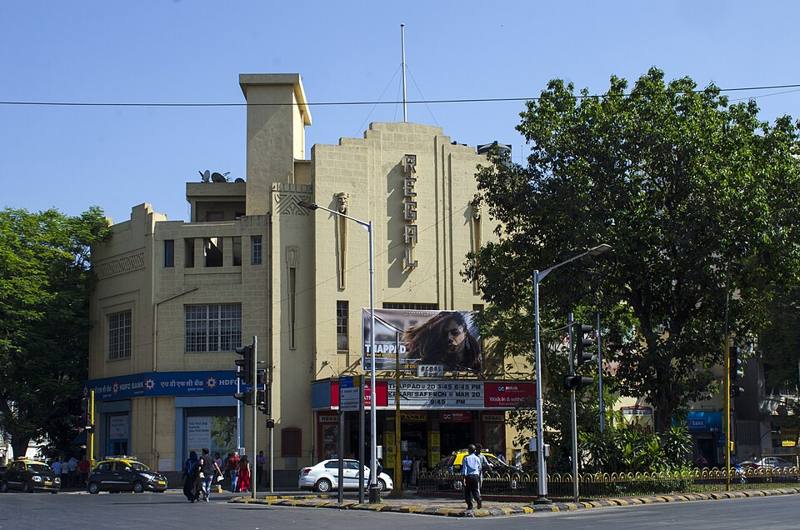
Single-screen cinemas such as the Regal in Mumbai, opened in 1933, were once the heart of moviegoing, with big crowds, whistling and applause at the hero's entrance. Since the 2000s, multiplex chains have taken over much of the market, while many single screens have closed or been converted.
Films in India are certified by the Central Board of Film Certification. The main ratings are U (unrestricted), UA (with parental guidance, now divided by age) and A (adults only).
Indian blockbusters often release worldwide on the same day, so audiences in the Gulf, the UK, North America and elsewhere watch new releases alongside India.
Where to start
For a classic, watch Pyaasa or Mughal-e-Azam. For the 1970s, Sholay. For a modern crowd-pleaser, try Lagaan or 3 Idiots (2009). Add a South Indian epic such as Baahubali: The Beginning (2015) to see the scale of pan-Indian filmmaking. Compare them with Korean cinema and Nollywood, two other industries that built huge audiences far from Hollywood.