Film Guides / Awards and festivals
The Red Sea International Film Festival explained
Held in Jeddah's historic Al Balad district, the Red Sea International Film Festival is the leading film festival in Saudi Arabia. Here is its history, its Yusr awards and how it supports new filmmakers.
How the festival began
The Red Sea International Film Festival was established in 2019 in Jeddah, the port city on Saudi Arabia's west coast, as part of the growth of the national film sector that followed the reopening of cinemas in 2018. Its first edition was planned for March 2020 but was postponed because of the COVID-19 pandemic.
The first edition finally opened on 6 December 2021 and ran until 15 December. It screened 138 films from 67 countries, including 16 feature films in the main competition. Since then the festival has usually been held in early December, with editions in 2022, 2023, 2024 and 2025.
The festival is organized by the Red Sea Film Foundation, a non-profit cultural organization based in Saudi Arabia. Its focus is on new storytelling and emerging talent from Saudi Arabia, the Arab world, Asia and Africa, alongside international premieres and gala screenings.
The venue
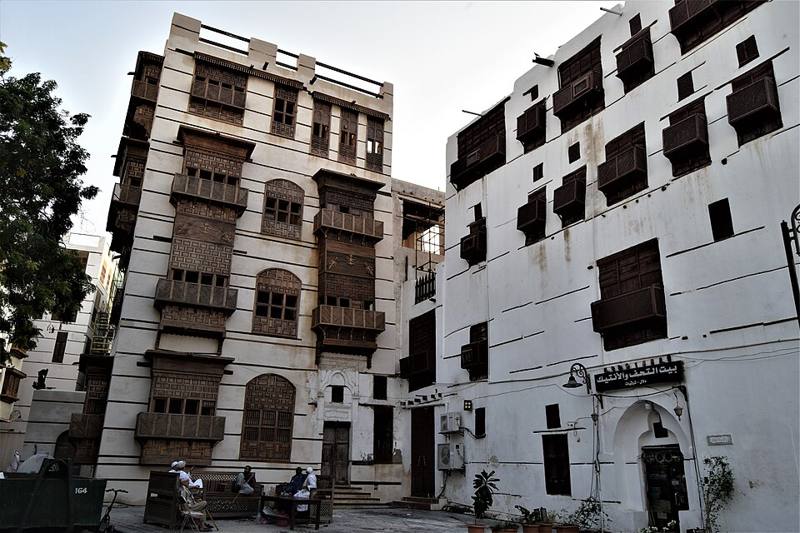
The festival is closely associated with Al Balad, Jeddah's historic district, known for its tall coral-stone houses and carved wooden balconies called rawasheen. Screenings, talks and events have taken place in and around the old town, together with gala screenings in purpose-built venues and in commercial cinemas across the city. The setting gives the festival a distinctive identity among international events.
The Yusr awards
The festival's prizes are called the Yusr awards. The main competition, known as Red Sea: Competition, features films by filmmakers from the Arab world, Asia and Africa.
| Award | What it honors |
|---|---|
| Golden Yusr for Best Feature Film | The top prize of the main competition |
| Silver Yusr for Best Feature Film | The second prize |
| Yusr for Best Director | Outstanding direction |
| Yusr Jury Prize | A film singled out by the jury |
| Yusr for Best Actor and Best Actress | Leading performances |
| Yusr for Best Screenplay | Writing |
| Yusr for Best Cinematic Achievement | Craft such as cinematography, editing or music |
| Golden and Silver Yusr for Short Film | The short film competition |
| Audience awards | Voted by festival audiences, with separate awards for Saudi and non-Saudi films |
In 2025, for example, the Golden Yusr for Best Feature Film went to Lost Land by Akio Fujimoto, and the Saudi film Hijra by Shahad Ameen won the Yusr Jury Prize and the audience award for a Saudi film.
The festival also presents honorary awards to established actors and filmmakers from around the world for their contribution to cinema.
More than screenings
Like Cannes and Berlin, the festival combines public screenings with an industry program:
- Red Sea Fund: grants for development, production and post-production of films from the Arab world, Africa and Asia.
- Red Sea Souk: the festival's market, where producers pitch projects and meet distributors, sales agents and financiers.
- Red Sea Lodge: a development lab that mentors writers, directors and producers as they develop projects.
- Talks and masterclasses: conversations with filmmakers about craft, from screenwriting and development to editing.
Several Saudi films supported by the foundation have gone on to international festivals. Norah, for example, premiered at the festival in 2023, won its Best Saudi Feature Film award, and was then selected for Cannes in 2024.
Festival facts at a glance
| Fact | Detail |
|---|---|
| Founded | 2019 |
| First edition | 6 to 15 December 2021 |
| City | Jeddah, Saudi Arabia |
| Usual timing | Early December |
| Top prize | Golden Yusr |
| Organizer | Red Sea Film Foundation |
| Focus | Arab, Asian and African cinema and emerging talent |
Festival dates can change from year to year; the edition after December 2025 was announced as moving to late 2027. Always check the official festival website for the current schedule, ticketing and program before planning a trip.
Why it matters
For Saudi audiences, the festival is a chance to see world cinema, restored Arab classics and new Saudi films on the big screen in the space of ten days. For filmmakers across the region, its funds and labs offer a path from first idea to finished film. Read more about the region's film traditions in our guide to Egyptian and Arab cinema.